


The Killer of Killer Clowns
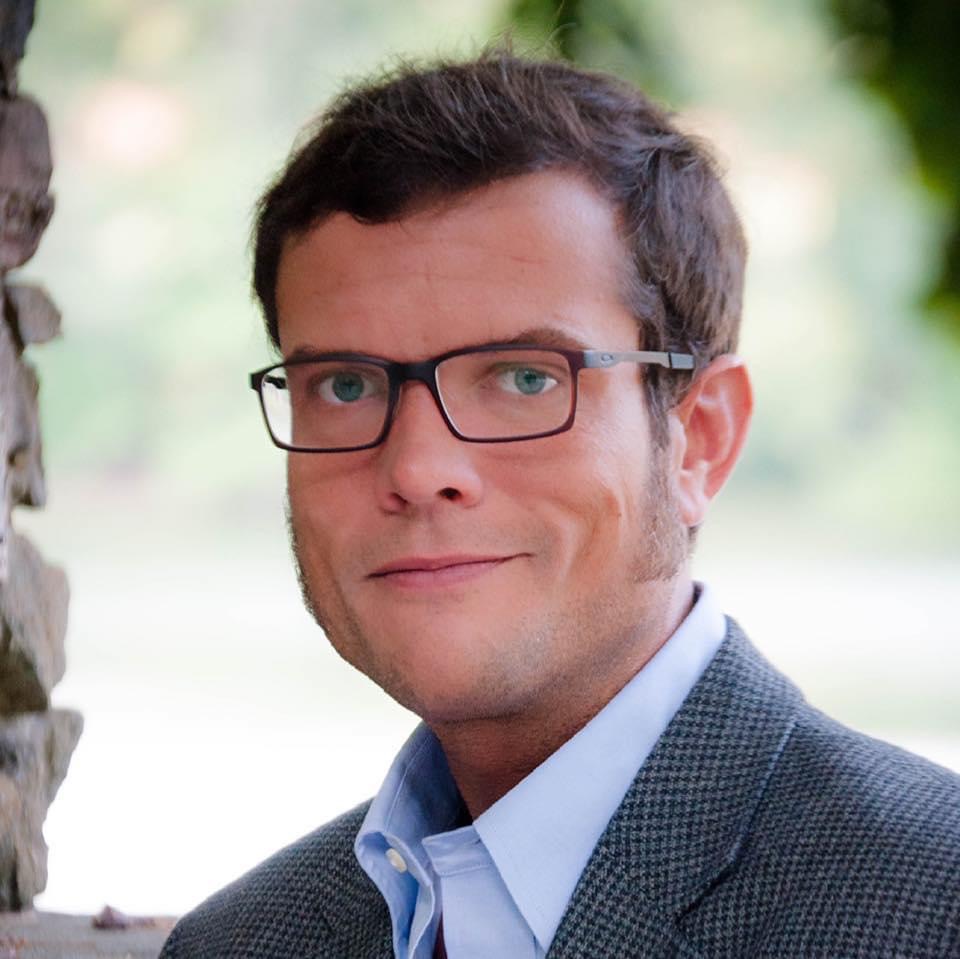

The girl wore glasses as thick as bottle bottoms and carried a backpack heavy with books nobody else would read. Emma Wheeler. Seventeen. She knew things about differential equations that would make a professor sweat, but she also knew things about clowns that nobody should know — and she wasn't sure, most days, whether knowing them was a gift or a curse her grandfather had passed down like a bad gene.
***
The first one came on a Tuesday in October when the leaves were the color of old blood on the sidewalks. She was walking home from the library at dusk, and there he stood under the streetlight. White face paint cracked like dry earth. Red smile too wide. Eyes black as the space between stars. He held balloons, but they weren't filled with helium. They hung down like dead things.
She had read about them on forums no one visits anymore. The clowns weren't what people assumed — not men in makeup, but something else wearing the idea of clowns like a coat. Her grandfather had called them jiǎzhuāng. The Pretenders. He'd kept notebooks, dense with cramped Chinese and diagrams she'd only half understood when she found them in his closet after the funeral. She hadn't gone looking for monsters. She'd been grieving, and the notebooks were just there, and she'd always been good at reading.
The thing under the streetlight turned its head awkwardly, like a bird — like something that had learned to move by watching but didn't understand how it worked. Emma kept walking. Her sneakers made no sound on the concrete. In her backpack were a graphing calculator, three textbooks, and something else in a leather sheath.
"You want a balloon, little girl," it said. The voice sounded like gravel in a disposal.
"No, thank you," she said. Kept walking.
The clown thing followed — not walking exactly, but occupying each streetlight in sequence without crossing the space between, as if distance were a suggestion it had chosen to ignore. Her mouth had gone dry. Her heart was hammering against her ribs in a way that made her feel twelve years old and stupid. The notebooks hadn't prepared her for the smell of it — copper and something rotting sweet underneath, like a carnival dumpster in August.
You don't have to do this. The thought surfaced before she could stop it. You could run. Scream. Pretend you never read the notebooks.
But she knew — the way her grandfather had known, the way it was apparently written somewhere in her blood — that running only worked until it didn't.
Her house was three blocks away. It might as well have been three states. She turned into the alley between Wilson's Dry Cleaning and the abandoned video store. Dead end. Dumpsters, broken glass, walls tagged with symbols that hurt to look at. The clown's smile stretched wider. Its teeth went back too far.
Emma set down her backpack and unzipped it with hands that only shook a little. The object in the sheath was heavy and cold — her grandfather's meat cleaver from his brother's restaurant in Chinatown, before the incident with the health inspector, before the brother disappeared and they found bones in the freezer that weren't from any animal known to the coroner. Her grandfather had carved characters into the blade with a nail and a steady hand: zhēn míng. True name. The theory, scrawled in his notebook margin, was that the Pretenders could be unmasked — that the inscriptions didn't kill them so much as strip away the borrowed shape and leave only what was real underneath. What was real, apparently, couldn't survive being seen.
The clown reached out with fingers that had too many joints. Emma moved — not like a seventeen-year-old girl who spent her time in libraries, but like something that had been coiled and waiting. The cleaver caught the sodium light still glowing at the alley mouth.
The cut was clean. The clown's hand fell and turned into a substance that was part liquid, part smoke. The thing screamed from somewhere other than its mouth — from the spaces in between. Things with too many legs scattered into the dark.
"You shouldn't know how to do that," it said.
"I read a lot," Emma said, and swung again.
When it was over, there was nothing inside the clothes. Emma stood in the alley breathing too fast, back pressed to the dumpster, staring at the flat pile of fabric on the concrete. She waited for something — triumph, maybe, or the clean satisfaction of a proof completed. What came instead was the shaking. It started in her hands and moved up her arms, and she sat down hard on the alley floor and put her head between her knees and stayed there until it passed.
Her grandfather had never mentioned the shaking. Maybe it went away eventually. Maybe it didn't.
She zipped her backpack and walked home. She did her calculus homework, ate dinner with her parents — who asked about her day, and she said it was fine — and then lay in bed staring at the ceiling until 2 a.m., thinking about a woman she'd never call because there was nothing to say. Hey Mom, I think Grandpa left me his monster-hunting route. Sorry I missed curfew.
She got up and read the notebooks again instead. More carefully this time.
***
They came in waves after that. Always at dusk. Always when she was alone. She learned their patterns: they hunted in groups of three, couldn't cross running water, feared specific geometric shapes. She drew protection circles in her notebooks between physics equations. Carried salt in her pockets. The cleaver acquired a companion — a kukri she ordered online with a birthday gift card — and then a straight razor that had belonged to her grandfather, found wrapped in cloth at the bottom of a hatbox.
The kills became more efficient, if not easier. Easier was not a word she let herself use. Her grandfather's notebooks were full of crossed-out passages, ink blots where the pen had pressed too hard. He'd been doing this since the 1970s. He'd died at sixty-eight of a heart attack, surrounded by family. She'd thought that was a good death until she started to understand what his life had actually cost him.
Once, a detective came to school. Asked questions about bodies found downtown — bodies that looked like men in clown suits until you looked closer and realized the bones were wrong. Emma sat quietly in the back of AP Chemistry and kept her hands flat on the desk so they wouldn't shake. The detective's eyes swept the room in slow arcs, landing briefly on each face — and when they landed on hers, she held the gaze and thought about the ideal gas law until he looked away. What was there to say? You're welcome? Check the hands next time — the bone count won't be right.
She started losing weight. Started keeping the blades under her bed. Her mother noticed the dark circles and suggested vitamins; her father suggested she was studying too hard. Neither suggestion was wrong, exactly.
She failed a physics test in November — the first test she'd ever failed — because she'd been awake for thirty-six hours tracking a nest and couldn't think about momentum without picturing a cleaver swing. Her best friend Priya stopped texting after Emma canceled plans four times without explanation; the last message sat unanswered in her phone for three weeks before she deleted the thread, because reading it hurt in a way she didn't have time for. She'd almost been caught once, a patrol car idling at the alley mouth while she was still inside with the aftermath. She'd pressed herself flat behind the dumpster and breathed through her mouth until it passed. She'd done the breathing exercises her gym teacher had taught her, because that was the only coping mechanism she had left that didn't require explaining herself to someone.
Winter arrived early. The snow like ash from a distant fire.
***
She was walking home from quiz bowl practice when she smelled copper and cotton candy, and stopped.
Seven of them. A whole nest. They stood in a circle in the park where kids used to play before the disappearances began, their balloons forming a canopy overhead in colors that didn't exist in any spectrum Emma had studied. The one in the middle was different — older, its paint not paint at all, its smile not a smile. It wore a crown made of baby teeth and spoke without opening its mouth.
"You've been busy, little girl. My children. My beautiful children."
Emma's stomach dropped. Seven. She had never faced more than two at once. Her grandfather's notes on group behavior were fragmentary — there was a page torn out, which she'd always assumed was an accident. She no longer assumed that.
Walk away, said the part of her that was still a seventeen-year-old with a future. Walk away, get more information, come back prepared.
But she could see, beyond the circle, the edge of a small sneaker half-buried in the snow. A child's shoe. Recent.
She set down her backpack.
They circled her in patterns that made her eyes water — geometries her brain refused to fully process, the same perceptual wrongness she'd first felt in the alley but amplified sevenfold. The old one laughed, and the sound was like breaking glass, like children crying, like every bad thing that had ever happened in the dark.
She moved first, because waiting was dying. The cleaver struck the nearest one in the throat; black ichor splattered across the snow. The kukri pierced another's spine. They came at her then — all of them, moving like spiders, like fever dreams, like the worst night she'd ever had scaled up and given teeth.
The third one caught her across the ribs. She felt something crack and went down on one knee, and for a moment the park tilted and she thought, very clearly: This is it. This is how the notebook ends. Her grandfather's page, the torn-out one — she understood now. Some things you didn't write down because writing them down made them too real to survive.
She got up anyway. Drove the straight razor across the old one's chest, speaking the words that made her throat burn — the true-name syllables her grandfather had transcribed phonetically in the margins, words from a language that predated Mandarin, predated writing, that named things by what they actually were rather than what they pretended to be.
The old one staggered. For a moment it looked almost human — almost confused, like something surfacing from a very long sleep.
"How?" it said, and its voice had changed. The gravel was gone. Underneath was something older and more lost than she'd expected.
"My grandfather knew your names," Emma said, breathing hard, hand pressed to her ribs. "He wrote them down. He made sure I could read them."
The inscriptions on the cleaver blade flared with a light that was more concept than photon, and the old one came apart the way they all came apart — not violently, but like a held breath released, like something that had been maintaining a shape it was never meant to hold finally letting go.
When it was over, she stood alone in the park. Seven piles of empty clothes. Seven dark stains soaking into the snow. The small sneaker, she saw now, was just a sneaker — lost weeks ago, probably, by some kid late for dinner. No child. No body. Relief hit her so hard she nearly laughed, nearly wept — no body, just a shoe, just a shoe — and she stood in the dark and let herself feel it, the full ridiculous weight of it, for exactly three seconds before her ribs reminded her they were broken.
But her ribs ground together when she breathed, and her hands wouldn't stop shaking, and it was 9 p.m. and her parents didn't know where she was.
***
Her mother was standing at the kitchen window when Emma came through the back door. One look — the torn jacket, the pallor, the way Emma held herself tilted to protect her left side — and her mother crossed the kitchen in four steps and took Emma's face in her hands.
"What happened to you?"
Emma had a story ready. She'd been working on stories for months, building a whole secondary life out of plausible lies. But standing in the warm kitchen under the overhead light, looking at her mother's face, the story dissolved.
"I need to show you something," Emma said instead. "Grandpa's notebooks. I need you to read them."
Her mother's expression shifted — something closing, something bracing — and Emma realized, for the first time, that her mother already knew there were notebooks. Had always known. Had chosen, carefully, not to pass them on.
"He wanted it to stop with him," her mother said quietly.
"I know," Emma said. "But it didn't."
They sat at the kitchen table until midnight. Her father wrapped her ribs with the matter-of-fact competence of someone who had done it before and didn't ask why. Her mother made tea and read passages from the notebooks aloud, very carefully, the way you read something you've been afraid of for years.
It wasn't a solution. The nests were still out there — she'd marked over thirty on the map above her desk, cities spreading across the continent in a pattern that looked almost like a constellation if you stood back far enough. There was still more work than one person could do. More than one family could do.
But her grandfather had worked alone because he'd believed the knowledge was a burden to be carried, not shared. Emma was starting to think that was the first mistake. Maybe the worst one.
"The forums," she said. "The people who used to post on them — some of them knew things. Real things. A few of them went dark, but not all."
Her mother looked at her over the rim of her teacup. "You're thinking about reaching out."
"I'm thinking Grandpa didn't have to do it alone, and he did anyway, and now he's dead, and there are thirty nests." Emma pressed her fingers flat on the table. "I'm thinking I'm seventeen and I have three blades and a partial education and I almost didn't come home tonight."
Silence. The refrigerator hummed. Outside, the snow had stopped falling.
"The characters on the cleaver," her mother said finally. "He taught me the pronunciation once, when I was small. I thought it was just — language lessons." She set down her cup. "I still remember them."
Emma looked at her mother — really looked, maybe for the first time in years. Saw the steadiness in her. The shape of something that had been waiting to be useful.
"Okay," Emma said. "Then we start there."
She pushed her glasses up her nose and pulled the map toward them both. Outside, the wind moved through the empty streets, through the places where things no longer waited. There were still too many red marks. Still too much dark matter in the universe, too many flaws in the fabric — her grandfather's phrase, worn smooth from use in the notebooks' margins.
But a flaw you could name, Emma had learned, was a flaw you could cut.
She uncapped her pen. Started making notes.
She'd always been good at homework.


Comments